Frequently Asked Questions
The most-asked questions about cell and molecular biology.
What exactly is cell and molecular biology?
It is the branch of life sciences that studies organisms at the level of individual cells and the molecules inside them—DNA, RNA, proteins, and lipids. It bridges the gap between what a cell looks like under a microscope and what the chemical machinery inside is actually doing.
Who are the 'main characters' everyone talks about?
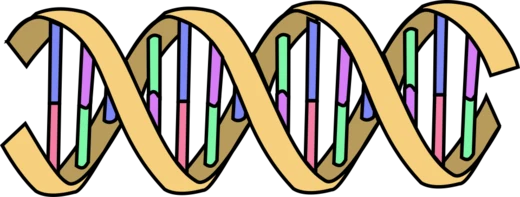
If you mean the molecules, the big three are DNA (the instruction manual), RNA (the messenger and copy), and proteins (the workers that carry out nearly every task). If you mean the people, Rosalind Franklin, James Watson, Francis Crick, and Maurice Wilkins are the most cited figures for elucidating the DNA double-helix structure in 1953.
Where should a newcomer start?
Begin with the central dogma—DNA is transcribed into mRNA, which is then translated into protein—because almost every other topic hangs off that single information flow. From there, a standard introductory text such as Alberts' Molecular Biology of the Cell walks you through organelles, membranes, and metabolism in a logical order.
What is the single most important key fact to know?
Every nucleated cell in your body carries the same roughly 3.2 billion base pairs of DNA, yet a hepatocyte and a neuron look and function completely differently because they read different subsets of those genes. This principle of differential gene expression is the engine behind all multicellular life.
What are the most celebrated notable moments in the field?
The 1953 elucidation of DNA's double-helix structure tops most lists, followed by the 1970s discovery of restriction enzymes and recombinant-DNA technology that launched genetic engineering. More recently, the 2012 development of CRISPR-Cas9 gene editing by Doudna and Charpentier is widely regarded as the field's biggest leap in decades.
What are the main subfields within the franchise?
The major ones are genetics (inheritance and gene function), biochemistry (metabolic pathways and enzyme mechanics), cell biology (organelles, signaling, division), and structural biology (three-dimensional shapes of macromolecules). They overlap heavily; a single research paper often sits at the intersection of two or three of them.
Who plays the antagonist role—what goes wrong in the story?
Mutations, misfolded proteins, and uncontrolled cell division are the recurring villains that drive cancer, neurodegenerative disease, and metabolic disorders. A large share of the field's research is essentially about understanding how these errors arise and how to correct or counter them.
Who are the key supporting players in the cast?
Beyond the headline molecules, you have the phospholipid bilayer membranes, the cytoskeleton (actin, tubulin, intermediate filaments), mitochondria as the cell's power plants, and the endomembrane system (ER, Golgi, lysosomes) that handles manufacturing and shipping. Each has its own dedicated literature and community of specialists.
Is there an ultimate goal the field is working toward?
There is no single endpoint, but the long-term ambition is a complete, predictive understanding of how molecular interactions produce living, self-repairing, adaptive cells. Practical milestones like synthesizing a minimal genome or engineering therapeutic proteins are treated as major 'season finales' along the way.
How do fans usually follow the story day to day?
Most people track the field through journals like Nature, Science, and Cell, plus open-access outlets such as eLife and bioRxiv for preprints. For a more narrative, accessible angle, popular-science podcasts and channels that break down new papers serve as the 'episode guides' for non-specialists.