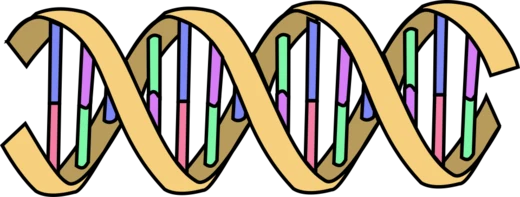
Peptide
Short amino acid chains with diverse biological roles.

DataBase Center for Life Science (DBCLS) · CC BY 4.0
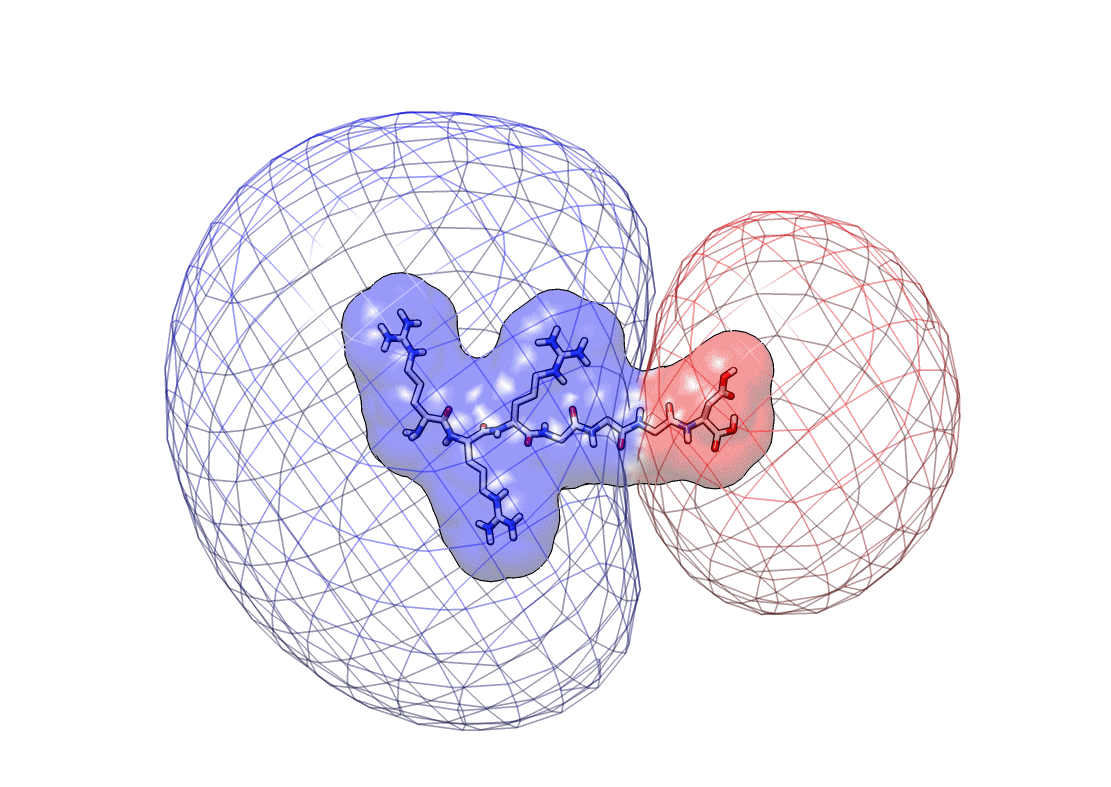
Peptides are short chains of amino acids linked by peptide bonds. Chains of fewer than twenty amino acids are termed oligopeptides, including dipeptides, tripeptides, and tetrapeptides. Peptides are usually linear polymers with a free amine at the N-terminus and a carboxyl group at the C-terminus, though macrocyclic peptides form a distinct class.
- field
- Biochemistry, molecular biology
- known_for
- Cell signaling, immune modulation, antimicrobial and hormonal functions
- classification
- Ribosomal and nonribosomal peptides
- length_terms
- Oligopeptide (2–20 amino acids), polypeptide (any length), protein (typically >50 amino acids)
Lore & Background
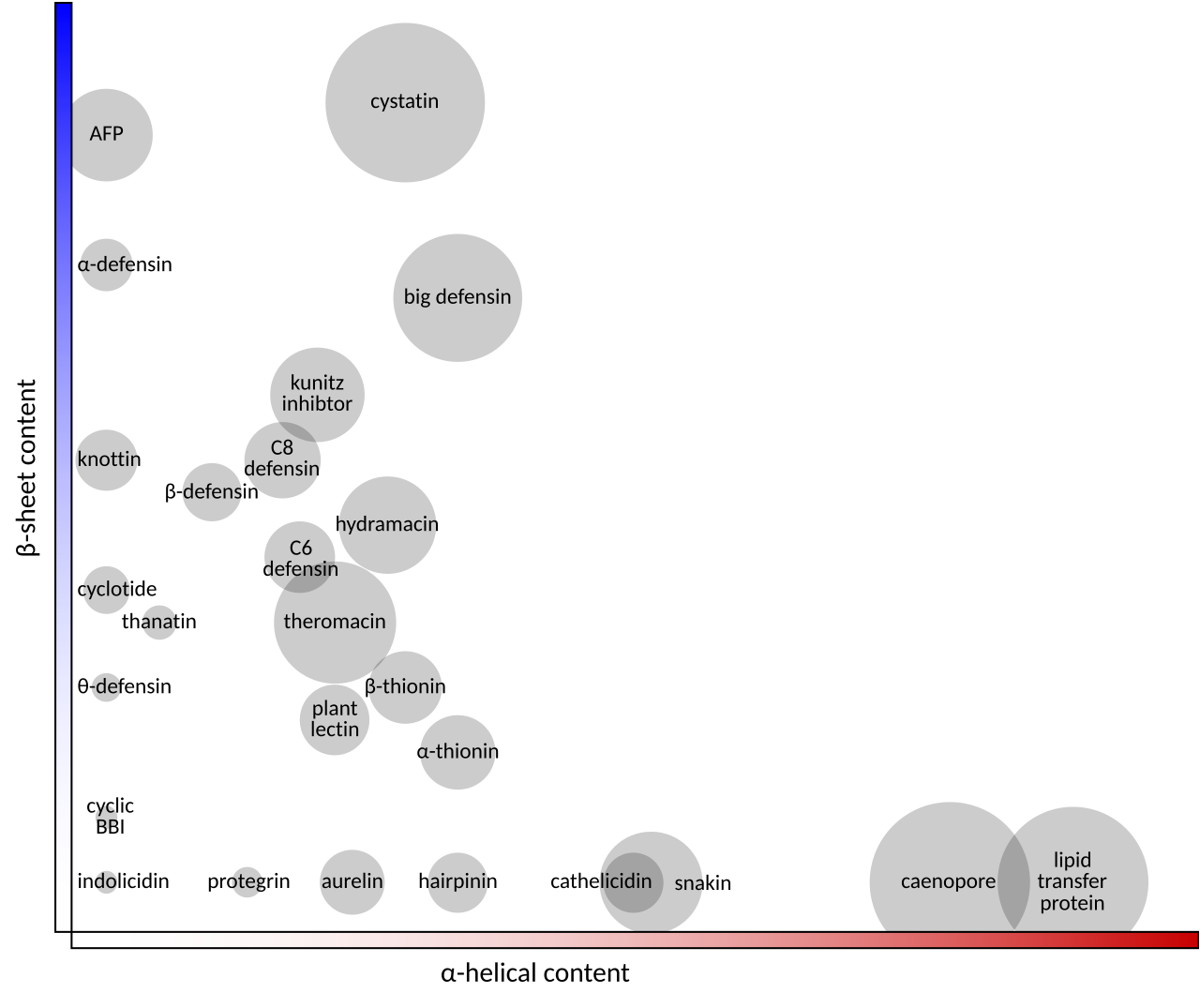
Peptides are classified by source and function, including plant, bacterial, fungal, venom, cancer, vaccine, immune, brain, endocrine, gastrointestinal, cardiovascular, renal, respiratory, opioid, and neurotrophic peptides. Ribosomal peptides, often in higher organisms, function as hormones and signaling molecules after proteolysis. Some microbes produce peptide antibiotics such as microcins and bacteriocins. Post-translational modifications include phosphorylation, hydroxylation, sulfonation, palmitoylation, glycosylation, and disulfide formation. While generally linear, lariat structures and exotic modifications like racemization of L-amino acids to D-amino acids occur, as in platypus venom.
Reader's Guide
Peptides are fundamental to numerous biological processes, including cell signaling and immune modulation, with studies indicating that 15–40% of all protein–protein interactions in human cells are mediated by peptides. They also represent a significant portion of the pharmaceutical market, estimated at least 10%. Nonribosomal peptides, such as glutathione, are assembled by enzyme complexes called nonribosomal peptide synthetases, often producing cyclic or highly complex structures, sometimes hybrid with fatty acids or polyketides. Machine learning and deep learning are extensively used to classify, screen, and design peptides, addressing challenges like dataset biases and model interpretability. The chemical space of peptides is defined by molecular descriptors such as molecular weight, lipophilicity, topological polar surface area, and hydrogen-bond dynamics, with dimensionality-reduction techniques like PCA, t-SNE, and UMAP used to visualize libraries. Peptides are distinguished from small molecules by their sequence, amide backbone flexibility, and susceptibility to modifications, which affect bioavailability and membrane permeability. Notation systems like FASTA, HELM, and BILN encode canonical and modified sequences, and chemical-space analysis aids virtual screening and discovery of shared bioactivity regions.
Did You Know?
- Chains of fewer than twenty amino acids are called oligopeptides.
- Nonribosomal peptides are assembled by enzymes, not the ribosome.
- Peptones are derived from animal milk or meat digested by proteolysis and used in nutrient media for growing bacteria and fungi.
- Peptide-based products currently represent an estimated 2–5% of the global pharmaceutical market, with no widely established figure of 10%.
Crick's Original Insight and the Watson Misreading
His central claim was not merely a pathway diagram but a directional constraint: once sequential information had been deposited into a protein, it could not be retrieved. Transfers between nucleic acids, or from nucleic acid to protein, were permissible; the reverse—protein informing protein or protein informing nucleic acid—was, in Crick's framing, fundamentally impossible. By 'information,' he meant the precise ordering of bases or amino acid residues. This streamlined version became the textbook default, yet it misrepresents Crick's actual argument. Watson's formulation omits the critical prohibition on information flowing backward from protein. Crick's original statement, with its explicit boundary conditions, remains the scientifically accurate articulation to this day.
From Gene to Polypeptide: The Transcription-Translation Pipeline
In eukaryotic cells, the journey from stored genetic code to functional protein unfolds across two spatially separated compartments. Transcription begins in the nucleus, where RNA polymerase and associated transcription factors copy a segment of DNA into a primary transcript called pre-mRNA. Before this molecule can serve as a template for protein synthesis, it undergoes essential processing: a 5' cap and a poly-A tail are appended, and splicing removes intervening segments. When alternative splicing is employed, a single pre-mRNA can yield multiple distinct mature mRNA variants, expanding the proteomic repertoire available to the cell. The mature mRNA then exits the nucleus and enters the cytoplasm, where ribosomes take over. The ribosome reads the mRNA in triplet codons, typically initiating at an AUG start signal. Aminoacylated transfer RNAs, guided by initiation and elongation factors, dock into the ribosome-mRNA complex, matching their anti-codons to the codon and delivering the corresponding amino acid. The nascent chain grows and begins folding almost immediately. Translation halts at a stop codon—UAA, UGA, or UAG. Crucially, the freshly released polypeptide is rarely the final protein; chaperones assist folding, inteins may be excised, cross-links formed, and cofactors such as heme attached before the molecule becomes biologically active.
Exceptions and Extensions: Reverse Transcription and RNA Replication
Although Crick's original formulation drew a firm line at the protein boundary, biology has revealed additional routes for sequential information transfer that operate outside the standard DNA-to-RNA-to-protein axis. Reverse transcription, catalyzed by the enzyme family known as Reverse Transcriptase, copies information from RNA back into DNA. This mechanism is essential to retroviruses such as HIV, which must convert their RNA genomes into DNA to integrate into a host cell. The same enzymatic logic also underpins retrotransposon activity and telomere synthesis in eukaryotic organisms. A second non-canonical pathway is RNA-dependent RNA replication, in which one RNA strand serves as the template for a new RNA copy. Numerous viruses exploit this strategy to amplify their genomes. The responsible enzymes, RNA-dependent RNA polymerases, are not exclusive to viruses; eukaryotic cells also harbor them, where they participate in RNA silencing pathways. RNA editing—where a protein complex guided by a 'guide RNA' alters an existing RNA sequence—can likewise be interpreted as a form of RNA-to-RNA information transfer. Each of these processes expands the picture beyond the simple linear flow that early textbook diagrams suggested.
The Architecture of Sequence: Why Linearity Matters
The central dogma rests on a structural fact about the molecules involved: DNA, RNA, and polypeptides are all linear heteropolymers, meaning each monomer unit is linked to no more than two neighbors. This one-dimensional architecture is what makes them capable of encoding sequence information in the first place. When one biopolymer serves as a template for another, the transfer is faithful and deterministic—the new molecule's sequence is entirely dictated by the original. In transcription, DNA bases are paired with complementary RNA bases in a direct, residue-by-residue fashion. In translation, the correspondence is less direct: three nucleotides, forming a codon, specify one amino acid. The standard codon table governs protein synthesis in humans and most mammals, yet certain biological contexts deviate; human mitochondrial genes, for instance, employ a different set of translation rules. At the very foundation of all this lies DNA replication, carried out by a protein complex called the replisome, which copies the parent strand into a complementary daughter strand. Whether the cell is somatic or reproductive, this copying step is arguably the most fundamental act of information transfer in any living system.
Gallery


Frequently Asked Questions
What is a Peptide?
A peptide is a short polymer built from amino acids joined by peptide bonds. It sits at the foundation of countless biological processes, from hormone signaling to immune defense.
How long is a Peptide chain?
Chains containing fewer than twenty amino acid residues are classified as oligopeptides, with specific names like dipeptide, tripeptide, and tetrapeptide for the shortest ones. Once a chain stretches beyond roughly fifty residues it generally earns the label 'protein,' though no universally fixed boundary exists.
What does Peptide do in the body?
Peptides serve as key players in cell-to-cell communication, immune system regulation, antimicrobial defense, and hormonal control. Their compact size lets them bind receptors and trigger signaling cascades that larger molecules simply cannot.
What types of Peptide exist?
Peptides are broadly split into ribosomal ones (translated from mRNA) and nonribosomal ones (assembled by dedicated synthetase enzymes). They can also be linear with a free N-terminus and C-terminus, or folded into macrocyclic rings that form a distinct structural class.
More in Cell And Molecular Biology 25-36
Elsewhere in the Cell And Molecular Biology universe
Spotted an error? Know more?
This is a living reference — every entry is fact-audited, and reader corrections feed straight into our audit queue. Suggest an edit · See this site's audit record