Phenylalanine
Essential amino acid, precursor to neurotransmitters and melanin.

AlyInWikiWonderland · CC0
Phenylalanine (symbol Phe or F) is an α-amino acid with the formula C₉H₁₁NO₂. It is one of the three aromatic amino acids and one of the 20 standard proteinogenic amino acids common to all life forms, and one of the nine essential amino acids. Humans and other animals cannot biosynthesize phenylalanine, so they must obtain it from dietary sources such as meat, dairy, eggs, and legumes.
- chemical_formula
- C9H11NO2
- classification
- Essential amino acid, neutral, nonpolar
- discoverers
- Schulze and Barbieri
- first_synthesizers
- Erlenmeyer and Lipp
Lore & Background
The genetic codon for phenylalanine was first discovered by J. Heinrich Matthaei and Marshall W. coli caused production of a polypeptide consisting solely of repeated phenylalanine, establishing the coding relationship between nucleic acid and protein expression.
Reader's Guide
Phenylalanine is significant as an essential amino acid that must be obtained from diet, serving as a direct precursor to the neuromodulator phenethylamine and to tyrosine, which in turn leads to dopamine, norepinephrine, epinephrine, and melanin. Its metabolism is critical: the liver enzyme phenylalanine hydroxylase converts it to tyrosine; a deficiency in this enzyme causes phenylketonuria (PKU), a genetic disorder requiring strict dietary management. Phenylalanine is also a component of the artificial sweetener aspartame, which must be labeled for phenylketonurics. The discovery of its genetic codon by Matthaei and Nirenberg was foundational to molecular biology. Its stereoisomers D-phenylalanine and DL-phenylalanine are studied for potential analgesic and antidepressant activities, though clinical evidence is mixed.
Did You Know?
- Phenylalanine is one of the nine essential amino acids that humans cannot biosynthesize.
- Phenylalanine is a precursor to the catecholamines dopamine, norepinephrine, and epinephrine.
- The artificial sweetener aspartame is metabolized into phenylalanine, requiring warning labels for phenylketonurics in many countries.
Chemical Identity & Biological Role
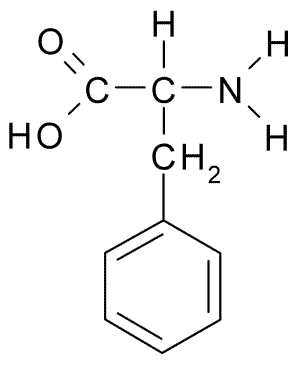
Phenylalanine, abbreviated as Phe or F (the latter chosen for its phonetic resemblance to the full name), is an α-amino acid with the molecular formula C9H11NO2. Structurally, it can be understood as alanine in which the methyl group has been replaced by a benzyl group, or equivalently, a terminal hydrogen swapped for a phenyl ring. This aromatic side chain renders the molecule neutral and nonpolar, owing to the inert, hydrophobic character of the benzyl group. It ranks among the four aromatic amino acids and sits within the set of twenty-one proteinogenic amino acids shared across all known life. Crucially, it is one of the nine essential amino acids: neither humans nor other animals possess the metabolic machinery to build it from scratch, so it must arrive through the diet—meat, dairy, eggs, legumes, or the milk of mammals. The L-isomer is the form incorporated into DNA-coded proteins. Beyond structural roles, phenylalanine serves as a direct precursor to the neuromodulator phenethylamine, to the amino acid tyrosine, to the catecholamine neurotransmitters dopamine, norepinephrine, and epinephrine, and to the pigment melanin. In the genetic code, it is specified by the messenger RNA codons UUU and UUC.
Discovery & Deciphering the Genetic Code
Heinrich Matthaei and Marshall W. Nirenberg cracked the genetic codon assigned to this amino acid. Their elegant experiment involved introducing messenger RNA composed of repeated uracil sequences into the bacterium E. coli. The bacterium, reading those uracil repeats, assembled a polypeptide chain made entirely of consecutive phenylalanine residues. This result provided critical evidence for the fundamental coding relationship between nucleic acid information stored in the genome and the proteins that living cells express, cementing phenylalanine's place at the intersection of biochemistry and molecular genetics.
Metabolic Pathways & Biochemical Conversions
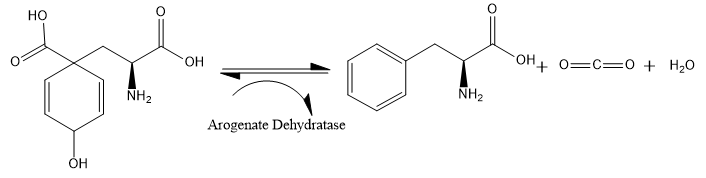
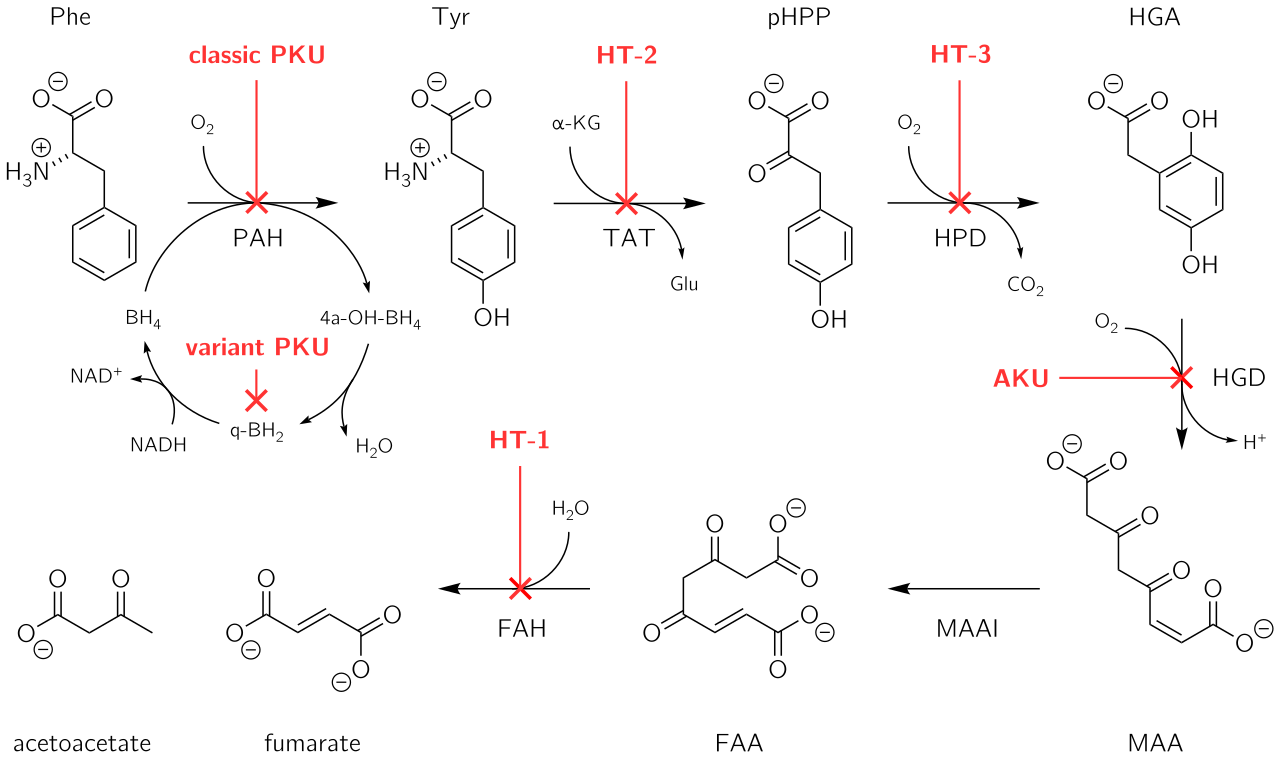
Although animals lack the ability to manufacture phenylalanine de novo, they do possess the enzymatic tools to dismantle and repurpose it. In the liver, the enzyme phenylalanine hydroxylase (PAH) catalyzes an irreversible conversion of L-phenylalanine into L-tyrosine. Tyrosine is then channeled into L-DOPA, which is further processed into the three catecholamine neurotransmitters—dopamine, norepinephrine, and epinephrine. Phenylalanine also shares the same active transport channel as tryptophan when crossing the blood–brain barrier. Excessive supplementation can deplete shared cofactors such as iron and tetrahydrobiopterin, thereby impairing the aromatic amino acid hydroxylase family and nitric oxide synthase, with downstream effects on serotonin and other aromatic amino acid production. In the plant kingdom, phenylalanine takes on a different role: it is the starting compound for flavonoid synthesis, contributes to lignan formation alongside tyrosine, and is converted into cinnamic acid by the enzyme phenylalanine ammonia-lyase. Meanwhile, bacteria, archaea, fungi, algae, certain protozoans, and plants all build phenylalanine through the shikimate pathway.
Phenylketonuria, Diet & Regulatory Labeling
The genetic condition phenylketonuria (PKU) arises when the body cannot produce functional phenylalanine hydroxylase, leaving individuals unable to metabolize the amino acid. Affected persons, termed phenylketonurics, must carefully regulate their phenylalanine intake and typically rely on periodic blood tests, with results reported in mg/dL or μmol/L (one mg/dL roughly equals 60 μmol/L). A rarer variant, hyperphenylalaninemia, stems from the inability to synthesize the cofactor tetrahydrobiopterin, though this cofactor can be supplemented. Pregnant women with PKU must maintain controlled blood levels even when the fetus carries only one defective allele, because the immature fetal liver cannot handle excess phenylalanine. Dietary sources include eggs, chicken, liver, beef, milk, and soybeans, and the artificial sweetener aspartame—found in diet drinks, foods, and medications—yields phenylalanine as a metabolic byproduct. Consequently, regulations in the United States, Canada, and Australia mandate the warning "Phenylketonurics: Contains phenylalanine" on aspartame-containing products, while the UK requires panels noting "aspartame or E951" plus a phenylalanine source warning, and Brazil mandates the Portuguese label "Contém Fenilalanina."
Gallery



Frequently Asked Questions
What is Phenylalanine?
Phenylalanine (abbreviated Phe or F) is an aromatic α-amino acid with the molecular formula C₉H₁₁NO₂. It is one of the 20 standard proteinogenic amino acids shared by all known life and is classified as neutral and nonpolar.
What is Phenylalanine's role in the body?
Beyond serving as a protein building block, Phenylalanine acts as a precursor for synthesizing neurotransmitters and melanin. Because humans cannot manufacture it de novo, it must be obtained from dietary sources such as meat, dairy, eggs, and legumes.
Why is Phenylalanine considered essential?
It is one of the nine essential amino acids because the human body lacks the enzymatic pathway to biosynthesize it from scratch. Animals and humans therefore depend entirely on external food sources to supply adequate amounts.
What makes Phenylalanine different from other amino acids?
It is one of only three aromatic amino acids, giving it a distinctive benzene-ring structure. Combined with its nonpolar, neutral character, this aromaticity strongly influences how it folds and interacts within protein structures.
More in Cell And Molecular Biology 25-36
Elsewhere in the Cell And Molecular Biology universe
Spotted an error? Know more?
This is a living reference — every entry is fact-audited, and reader corrections feed straight into our audit queue. Suggest an edit · See this site's audit record