
Phospholipid
Amphiphilic lipids essential for cell membrane structure and brain function.
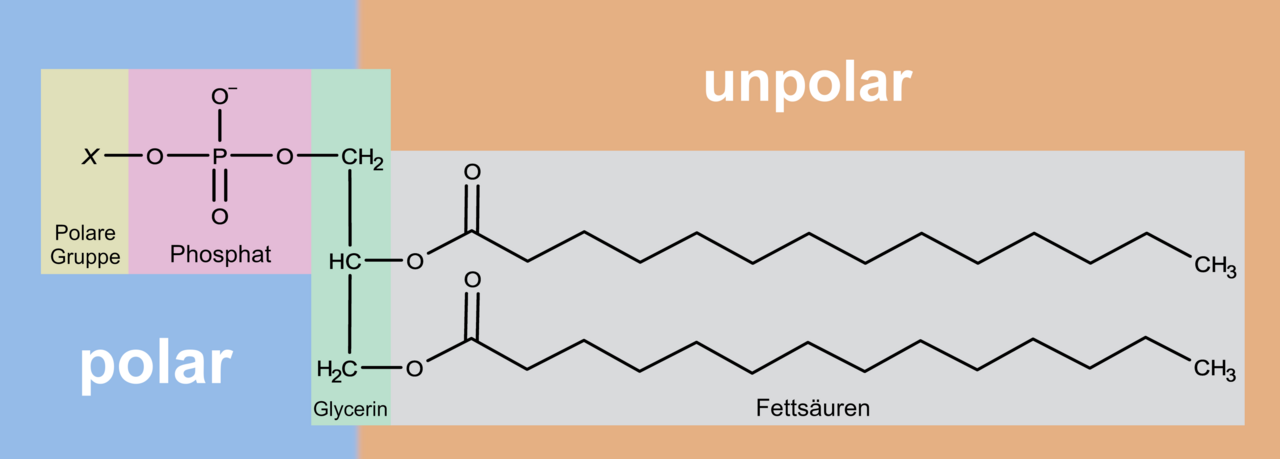
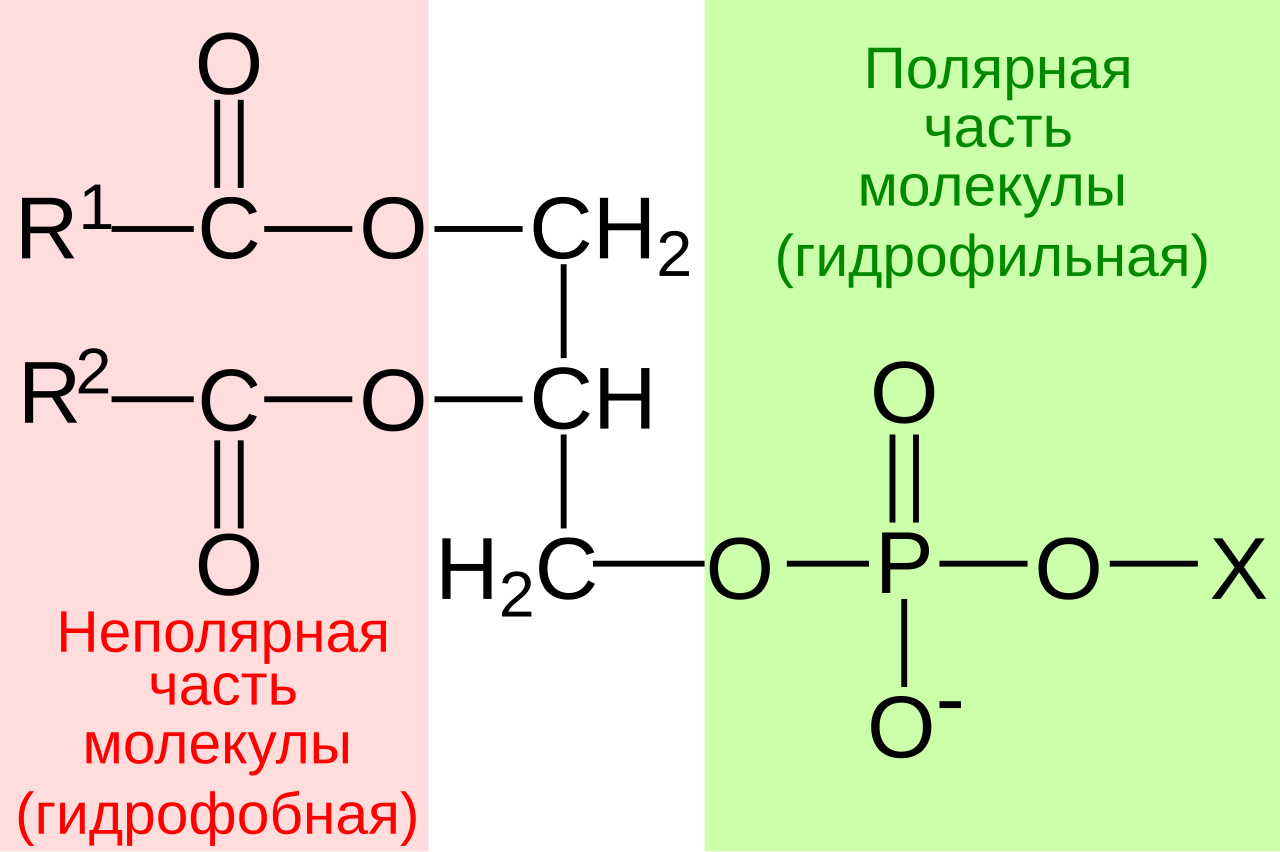
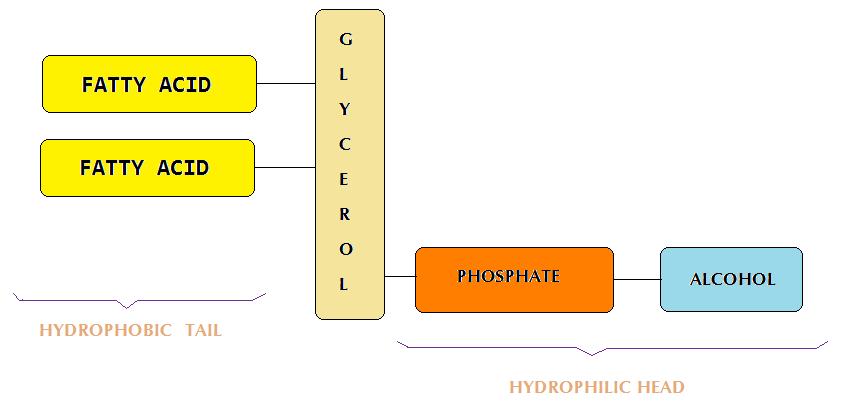
Phospholipids are a type of lipid built like a tiny anchor: one end is water-loving (hydrophilic) thanks to a phosphate group, while the other end is water-fearing (hydrophobic), made of two fatty acid tails. These two parts are linked by an alcohol, usually glycerol. In marine environments, the fatty acid tails often include the omega-3s EPA and DHA. The phosphate head can be decorated with small organic molecules like choline, ethanolamine, or serine.
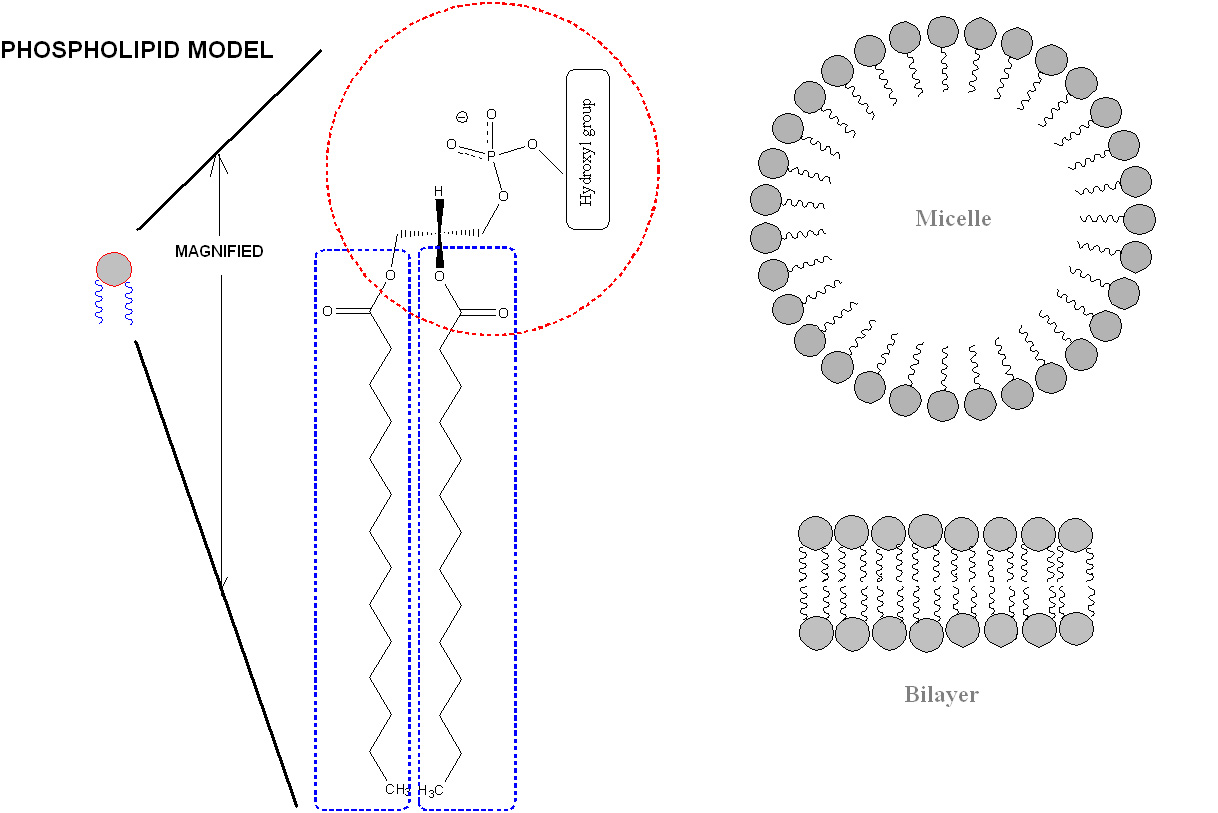
These molecules are fundamental to every cell membrane. Because they are amphiphilic—part water-loving, part water-fearing—they naturally arrange into a bilayer in water. In this structure, the heads face outward toward the watery environment on both sides, while the tails tuck inward, away from water. This bilayer is the basic framework for all cell membranes, as well as for structures like vesicles and virus coatings. In eukaryotic cells, sterols (another class of lipid) are mixed in among the phospholipids, giving the membrane both fluidity and resistance to tearing.
Phospholipids are especially vital in the brain. They make up neuronal membranes, help build the blood–brain barrier, and support neurotransmitter activity—including the production of acetylcholine. As people age, phospholipid levels in the brain drop; by age 80, levels can be up to 20% lower, which may affect memory, focus, and thinking. Clinical trials show that taking phospholipids from milk fat globule membrane (MFGM) can help support memory, mood, and the ability to handle stress in both children and adults. In several controlled studies, a daily dose of 300–600 mg of MFGM phospholipids noticeably lowered perceived stress and improved mental performance under pressure.
The first phospholipid ever identified in biological tissue was lecithin (also called phosphatidylcholine), found in chicken egg yolk in 1847 by French chemist Theodore Nicolas Gobley. Today, purified phospholipids are made commercially and used in nanotechnology and materials science. They are also widely employed to create liposomes and other nanoformulations for delivering drugs—whether applied to the skin, taken by mouth, or injected—to improve absorption, reduce toxicity, and help drugs cross membranes. For example, an ethosomal formulation of the antifungal ketoconazole using phospholipids shows promise for transdermal delivery.
In the lab, phospholipids are studied using molecular dynamics simulations with force fields like GROMOS, CHARMM, or AMBER. They are optically birefringent, meaning their refractive index differs depending on the direction of light, which can be measured with cross polarizers or techniques like dual polarization interferometry to assess lipid order. Analyzing phospholipids is tricky because different types are so similar in polarity; oil chemists often rely on spectroscopy to measure total phosphorus content. Advances in lipidomics continue to deepen understanding of phospholipids and their roles in diseases such as cancer and neurological disorders.
Lore & Background
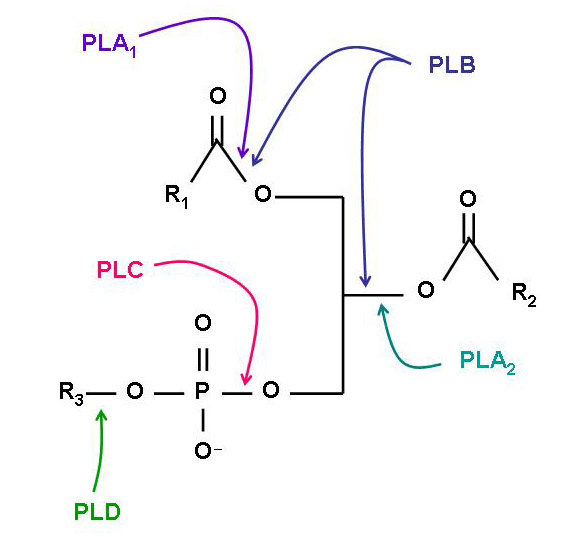
Phospholipids are amphiphilic molecules that in aqueous solutions form lipid bilayers, the dominant structural motif of all cell membranes and some biological structures such as vesicles or virus coatings. Their hydrophilic end usually contains a negatively charged phosphate group, which can be modified with simple organic molecules such as choline, ethanolamine, or serine, while the hydrophobic end consists of two fatty acid tails. In biological membranes, phospholipids often occur with other molecules like proteins, glycolipids, and sterols, with sterols contributing to membrane fluidity by hindering the packing together of phospholipids. Research indicates that phospholipid levels in the brain decline with age, with studies showing up to a 20% reduction by age 80, potentially impacting memory, focus, and cognitive performance. Dietary supplementation with phospholipids derived from the milk fat globule membrane (MFGM) has been shown in clinical trials to support memory, mood, and stress resilience in both children and adults. Phospholipids are produced commercially from sources such as soya, rapeseed, sunflower, chicken eggs, bovine milk, and fish eggs, with each source having a unique profile of individual phospholipid species and fatty acids. They have found applications in nanotechnology, materials science, and drug delivery, including liposomal and ethosomal nanoformulations for improved bioavailability and reduced toxicity. Some types of phospholipid can be split to produce products that function as second messengers in signal transduction, such as phosphatidylinositol (4,5)-bisphosphate (PIP2), which can be split by phospholipase C into inositol triphosphate (IP3) and diacylglycerol (DAG).
Reader's Guide
Phospholipids are fundamental to life as the primary structural component of all cell membranes, forming the lipid bilayer that provides both fluidity and mechanical strength. Their amphiphilic nature—with a hydrophilic phosphate-containing head and hydrophobic fatty acid tails—drives self-assembly into bilayers in aqueous environments, a property exploited in nanotechnology and drug delivery systems. Beyond structure, phospholipids are critical for brain health: they are essential for neuronal membranes, the blood–brain barrier, and neurotransmitter activity, including acetylcholine synthesis. Phospholipids also participate in cell signaling, as some are cleaved to produce second messengers like IP3 and DAG, and serve as raw material for prostaglandin and jasmonic acid synthesis. Their commercial production from diverse sources (soya, eggs, milk, fish) enables wide use in food as emulsifiers (e.g., in mayonnaise) and in pharmaceuticals for drug delivery. Computational simulations using force fields like CHARMM and AMBER, along with analytical methods such as 31P-NMR and HPLC-ELSD, continue to advance understanding of phospholipid behavior and roles in diseases including cancer and neurological syndromes.
Molecular Architecture and the Bilayer Blueprint
Phospholipids owe their extraordinary structural role to a single elegant design: a polar head bearing a phosphate group paired with two nonpolar fatty-acid tails, all tethered through an alcohol residue, most commonly glycerol. This amphiphilic geometry means that when these molecules are dropped into water, the tails instinctively cluster away from the solvent while the heads remain exposed, producing a self-assembled bilayer. Two sheets of oppositely oriented molecules lock together, tails meeting in the middle, heads facing the aqueous environment on either side. This arrangement is the foundational architecture of every cell membrane, as well as vesicle walls and even the lipid coats of certain viruses. In eukaryotic cells, sterol molecules weave between the phospholipid rows, nudging them apart just enough to preserve lateral fluidity while still granting the sheet mechanical resilience against tearing. The older fluid-mosaic picture—where proteins and lipids drift freely through a two-dimensional solvent—has since been refined by lipid-polymorphism research, revealing that membrane behavior under physiological conditions is far more nuanced than a simple mosaic suggests.
Guardians of Neural Structure and Cognition
Within the brain, phospholipids are far more than passive building blocks. They form the structural backbone of neuronal membranes, help assemble the blood–brain barrier, and participate directly in neurotransmitter chemistry, including the synthesis of acetylcholine. Marine-derived phospholipids are particularly notable because they carry long-chain omega-3 fatty acids—EPA and DHA—as integral parts of their tail structure. Unfortunately, research shows that brain phospholipid concentrations fall steadily over a lifetime, with measurements indicating a reduction of roughly twenty percent by the age of eighty. This gradual depletion is thought to contribute to the memory lapses, diminished focus, and slower cognitive processing that many older adults experience. Encouragingly, clinical trials using phospholipids sourced from the milk fat globule membrane have demonstrated measurable benefits in both children and adults, supporting memory, mood, and the ability to cope with stress. Multiple randomized controlled trials further confirm that a daily dose of three to six hundred milligrams of these MFGM phospholipids can significantly lower perceived stress and sharpen cognitive performance when individuals are working under pressure.
From Egg Yolk to a Family of Molecules
Since that landmark, the family has grown into a diverse collection of molecules. The phosphate head can be decorated with small organic groups such as choline, ethanolamine, or serine, giving rise to phosphatidylcholine, phosphatidylethanolamine, and phosphatidylserine, among others. A parallel branch, the phosphoinositides, includes phosphatidylinositol and its phosphorylated variants carrying one, two, or three phosphate groups at specific positions. Beyond the glycerol-based diacylglycerides, sphingolipid phospholipids such as sphingomyelin and ceramide-phosphorylethanolamine add yet another structural dimension. Each member plays a specialized role in membrane signaling, trafficking, and cellular communication, making the phospholipid family one of the most functionally versatile groups of lipids in biology.
From the Lab Bench to Nanomedicine
The practical reach of phospholipids extends well beyond the cell. Purified preparations are manufactured commercially and have found homes in nanotechnology and materials science. In medicine, their ability to form stable vesicles makes them the workhorse of liposomal, ethosomal, and other nanoformulations used to deliver topical, oral, and injectable drugs. These formulations improve bioavailability, lower toxicity, and enhance membrane permeability. Liposomes are typically built from phosphatidylcholine-rich phospholipids, sometimes blended with mixed-chain species that add surfactant-like properties. One promising example is an ethosomal formulation of ketoconazole designed for transdermal treatment of fungal infections. On the research side, lipidomics—the systematic profiling of lipid conformations and species—has deepened understanding of diseases ranging from cancer to neurological syndromes. Computational work relies on molecular-dynamics simulations with force fields such as GROMOS, CHARMM, and AMBER to model phospholipid behavior. Analytical challenges remain, however: the narrow polarity range among phospholipid species makes straightforward detection difficult, so laboratories turn to 31P-NMR spectroscopy and HPLC with evaporative light-scattering detection for more precise quantification.
Gallery

Frequently Asked Questions
What are Phospholipid's powers and role?
Phospholipid's defining trait is its dual nature: a water-loving phosphate head paired with two water-shy fatty-acid tails, which lets it spontaneously assemble into the bilayer that forms every cell's boundary. Beyond structural support, it is indispensable for brain architecture, the blood–brain barrier, and the proper signaling of neurotransmitters.
How does Phospholipid's story end?
There is no single narrative conclusion—Phospholipid is a continuously recycled and renewed component of living membranes, constantly broken down and reassembled by cells throughout an organism's life. Its 'arc' is therefore an ongoing cycle of turnover rather than a fixed ending.
Why is Phospholipid important?
Without Phospholipid, cells could not form the selective barriers that separate their interior from the outside world, and no multicellular organism could exist. It also underpins higher-level functions such as maintaining the blood–brain barrier and supporting the chemical signaling that makes thought and sensation possible.
What does Phospholipid's molecular structure look like?
Each Phospholipid molecule is built around a small alcohol backbone—most commonly a glycerol—to which a phosphate-containing head group and two long fatty-acid chains are attached. This arrangement gives it the characteristic head-and-tails geometry that drives spontaneous bilayer formation in aqueous environments.
More in Cell And Molecular Biology 1-24
Spotted an error? Know more?
This is a living reference — every entry is fact-audited, and reader corrections feed straight into our audit queue. Suggest an edit · See this site's audit record