
Lipoprotein
Lipoproteins transport fats and cholesterol in blood plasma.

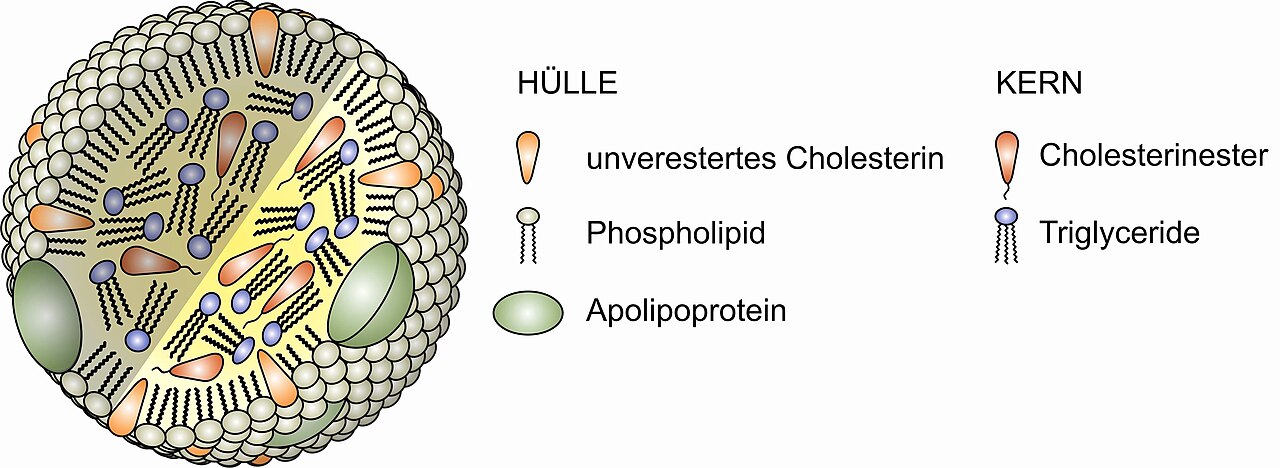
High-density lipoproteins.svg : Rfch derivative work: Miguelferig · CC0
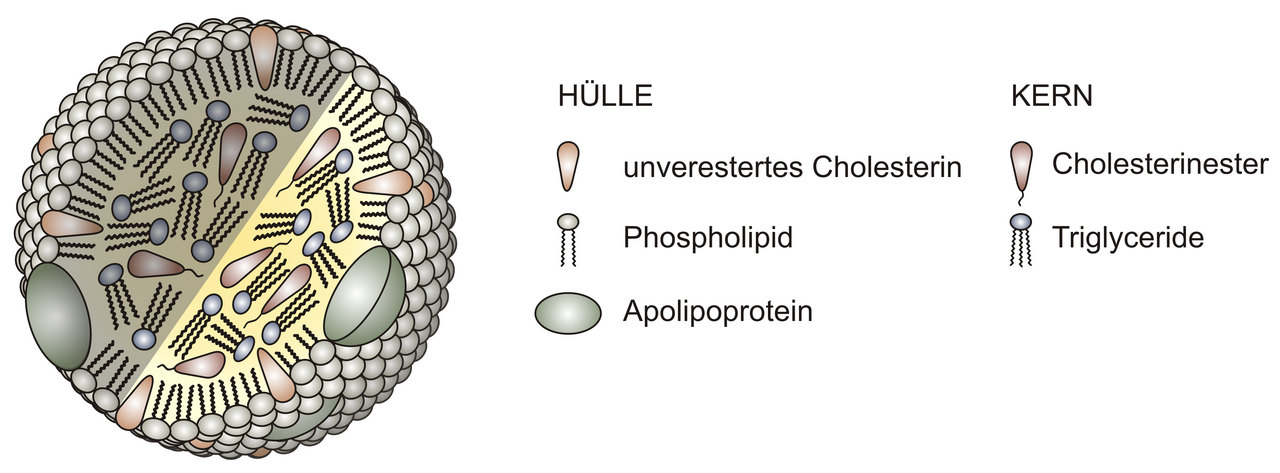
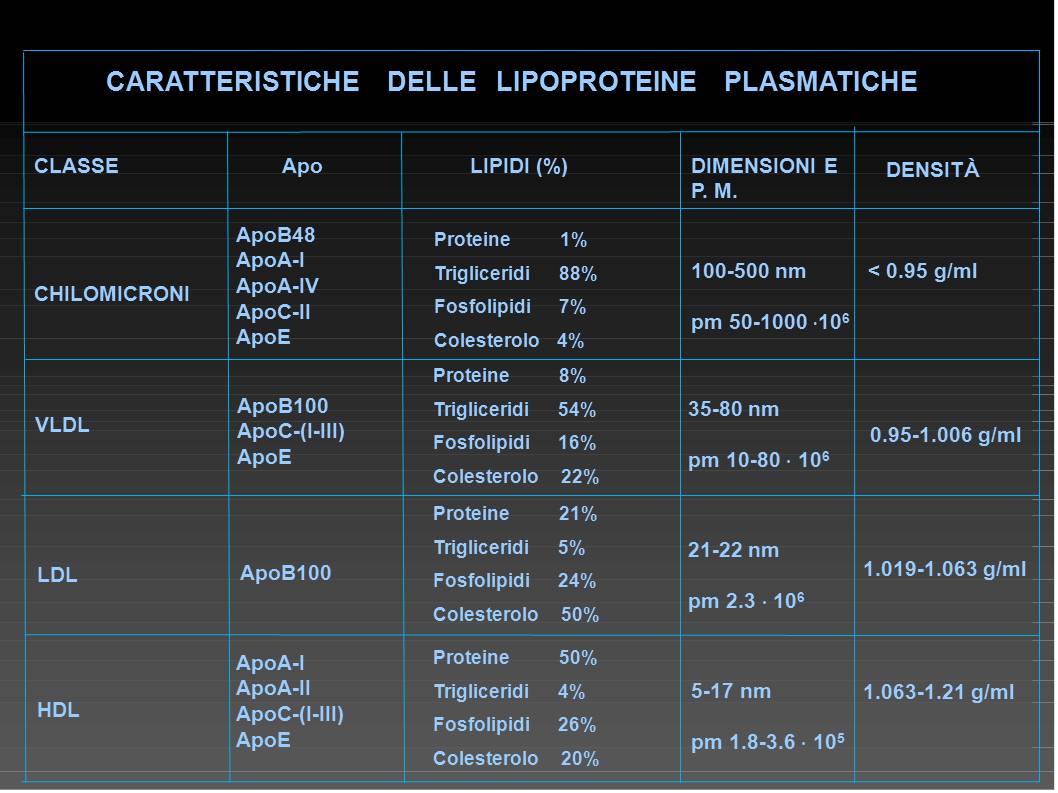
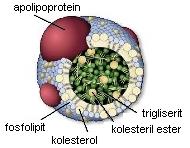
Lipoproteins are biochemical assemblies whose primary function is to transport hydrophobic lipid (fat) molecules in water, such as blood plasma or other extracellular fluids. They consist of a cholesteryl esters and triglycerides center, surrounded by a phospholipid outer shell, with hydrophilic portions oriented outward and lipophilic portions inward. A special kind of protein, called apolipoprotein, is embedded in the outer shell, stabilizing the complex and giving it a functional identity that determines its role. Plasma lipoprotein particles are commonly divided into five main classes based on size, lipid composition, and apolipoprotein content: HDL, LDL, IDL, VLDL, and chylomicrons. Subgroups of these particles are primary drivers or modulators of atherosclerosis.
- field
- Biochemistry, Lipid Transport
- known_for
- Transporting fats and cholesterol in blood plasma; five main classes (HDL, LDL, IDL, VLDL, chylomicrons); involvement in atherosclerosis
- structure
- Hydrophobic core of cholesteryl esters and triglycerides; hydrophilic membrane of phospholipids, free cholesterol, and apolipoproteins
Lore & Background
Lipoproteins are complex particles that have a central hydrophobic core of non-polar lipids, primarily cholesteryl esters and triglycerides, surrounded by a hydrophilic membrane consisting of phospholipids, free cholesterol, and apolipoproteins. The handling of lipoprotein particles in the body is referred to as lipoprotein particle metabolism, divided into exogenous and endogenous pathways depending on whether the lipids are dietary or originate in the liver. In the exogenous pathway, bile emulsifies fats, pancreatic lipase cleaves triglycerides, and enterocytes absorb the products, reassembling them into triglycerides that are packaged with apolipoprotein B-48 into nascent chylomicrons. These are secreted into lacteals, enter the bloodstream via the thoracic duct, and eventually reach the liver via the circulation. There, they interact with HDL to receive apolipoproteins C-II and E, becoming mature chylomicrons that activate lipoprotein lipase to release fatty acids and glycerol. The liver then processes the chylomicron remnants, so they do not bypass the liver entirely.
Reader's Guide
Lipoproteins are significant because they enable the transport of water-insoluble fats and cholesterol through the blood plasma to all cells and tissues, which is essential for cell membrane construction and energy storage. Their metabolism involves two main pathways: exogenous (dietary lipids) and endogenous (liver-synthesized lipids). The five main classes—HDL, LDL, IDL, VLDL, and chylomicrons—differ in size, lipid composition, and apolipoprotein content, and subgroups are primary drivers or modulators of atherosclerosis, a key disease process. The liver acts as the central platform for handling triglycerides and cholesterol, while adipocytes store triglycerides but do not produce lipoproteins. The reverse transport pathway removes excess cholesterol from peripheral cells via nascent HDL particles. Understanding lipoproteins is crucial for comprehending lipid-related disorders and cardiovascular health.
Did You Know?
- Lipoproteins have a hydrophobic core of cholesteryl esters and triglycerides surrounded by a hydrophilic membrane of phospholipids, free cholesterol, and apolipoproteins.
- Plasma lipoproteins are divided into five main classes: HDL, LDL, IDL, VLDL, and chylomicrons, based on size, lipid composition, and apolipoprotein content.
- Apolipoproteins embedded in the outer shell stabilize the complex and give it a functional identity that determines its role.
- The liver is the main platform for handling triglycerides and cholesterol, but adipocytes do not produce any lipoproteins.
Discovery and the Genetic Blueprint
That gene, designated LPA, sits on chromosome 6q25.3 through q26 and serves as the principal genetic controller of plasma Lp(a) levels, which are highly heritable from parent to child. What makes the LPA gene particularly fascinating is a structural feature called the KIV-2 variable number tandem repeat. The result is a family of protein variants, termed apo(a) isoforms, that differ substantially in molecular size. Beyond repeat number, mutations in the LPA promoter region can further dampen apo(a) production, adding another layer of genetic regulation to an already complex system.
The Size-Paradox of Isoform Production
Each Lp(a) particle resembles a standard LDL molecule in its lipid core, but it carries an additional protein, apolipoprotein(a), stitched covalently onto the apoB protein that forms the particle's outer shell. The hallmark of this extra protein is its extraordinary size variability, driven by the kringle IV repeat polymorphism encoded in the LPA gene. In circulation, individuals can show Lp(a) concentrations spanning more than a thousandfold, from below 0.2 mg/dL to above 200 mg/dL, a range observed across every population studied. A consistent and counterintuitive pattern emerges: the larger the apo(a) isoform, the lower the plasma Lp(a) concentration tends to be. One leading explanation centres on intracellular protein handling. Larger isoforms cause more precursor protein to accumulate within the endoplasmic reticulum, slowing the rate at which the finished particle is released into the bloodstream. Because Lp(a) is not considered fully synthesised until the precursor exits the cell, this bottleneck in production naturally caps the circulating level of the bigger variants.
Mechanisms of Harm and Population Disparities
Lp(a) is implicated in atherosclerosis through several converging pathways. Its apo(a) protein bears structural resemblance to plasminogen and tissue plasminogen activator, allowing it to compete for binding sites and thereby blunt fibrinolysis. It also provokes the release of PAI-1 and can suppress tissue factor pathway inhibitor, collectively tilting the balance toward clot formation. In parallel, Lp(a) serves as a preferential carrier of oxidised phospholipids in human plasma, dragging atherosclerosis-promoting cholesterol and inflammatory cargo into vessel walls where it recruits immune cells and drives smooth muscle proliferation. The population-level picture is striking. Mean Lp(a) concentrations run two to three times higher in groups of African descent than in Asian, Oceanic, or European cohorts. The ARIC Study, drawing on four geographically diverse US communities, estimated that elevated Lp(a) accounted for 10.2 percent of atherosclerotic cardiovascular disease cases among Black adults versus 4.7 percent among white adults, yielding a population-attributable fraction ratio of 2.30. Because the hazard ratios themselves did not differ significantly by race, the study attributed the gap largely to the underlying distribution of Lp(a) levels.
Clinical Stubbornness and an Evolutionary Riddle
Managing elevated Lp(a) remains a therapeutic challenge. Niacin, or vitamin B3, has demonstrated a more reliable reduction in Lp(a) levels, particularly in individuals carrying the low-molecular-weight isoforms. Diet, exercise, and other lifestyle modifications exert only marginal influence on plasma levels, which are instead governed overwhelmingly by genetics. The particle circulates with a half-life of roughly three to four days, and while the kidney appears to participate in its clearance, the full catabolic pathway remains poorly understood. Perhaps most intriguingly, people who lack Lp(a) entirely or carry very low levels appear perfectly healthy, suggesting the molecule is not essential under ordinary conditions. Lp(a) is found only in humans and old-world monkeys, a narrow evolutionary distribution that hints it may have conferred a selective advantage—perhaps against certain infectious diseases—rather than serving a fundamental physiological role.
Gallery
Frequently Asked Questions
Who is Lipoprotein?
Lipoprotein is a biochemical particle that acts as a delivery vehicle for fat-soluble molecules traveling through watery environments like blood plasma. It essentially solves the solubility problem of hydrophobic lipids in the body's aqueous fluids.
What is Lipoprotein's core role?
Its primary job is shuttling cholesterol and triglycerides through the bloodstream so they can reach the tissues that need them. Without lipoprotein particles, these essential fats would simply clump together and be unable to move in water-based body fluids.
What does Lipoprotein's structure look like?
At its center sits a dense core of cholesteryl esters and triglycerides, all tucked away from water. This core is wrapped in a phospholipid and free-cholesterol shell with water-loving heads facing outward, while apolipoproteins are studded into that shell to give each particle its specific identity and stability.
What are the five main classes of Lipoprotein?
The plasma lipoprotein family is divided into chylomicrons, VLDL, IDL, LDL, and HDL based on their density and cargo composition. Each class follows a distinct metabolic pathway, yet they all share the same basic core-and-shell architecture.
Why is Lipoprotein important, and what is its 'conflict'?
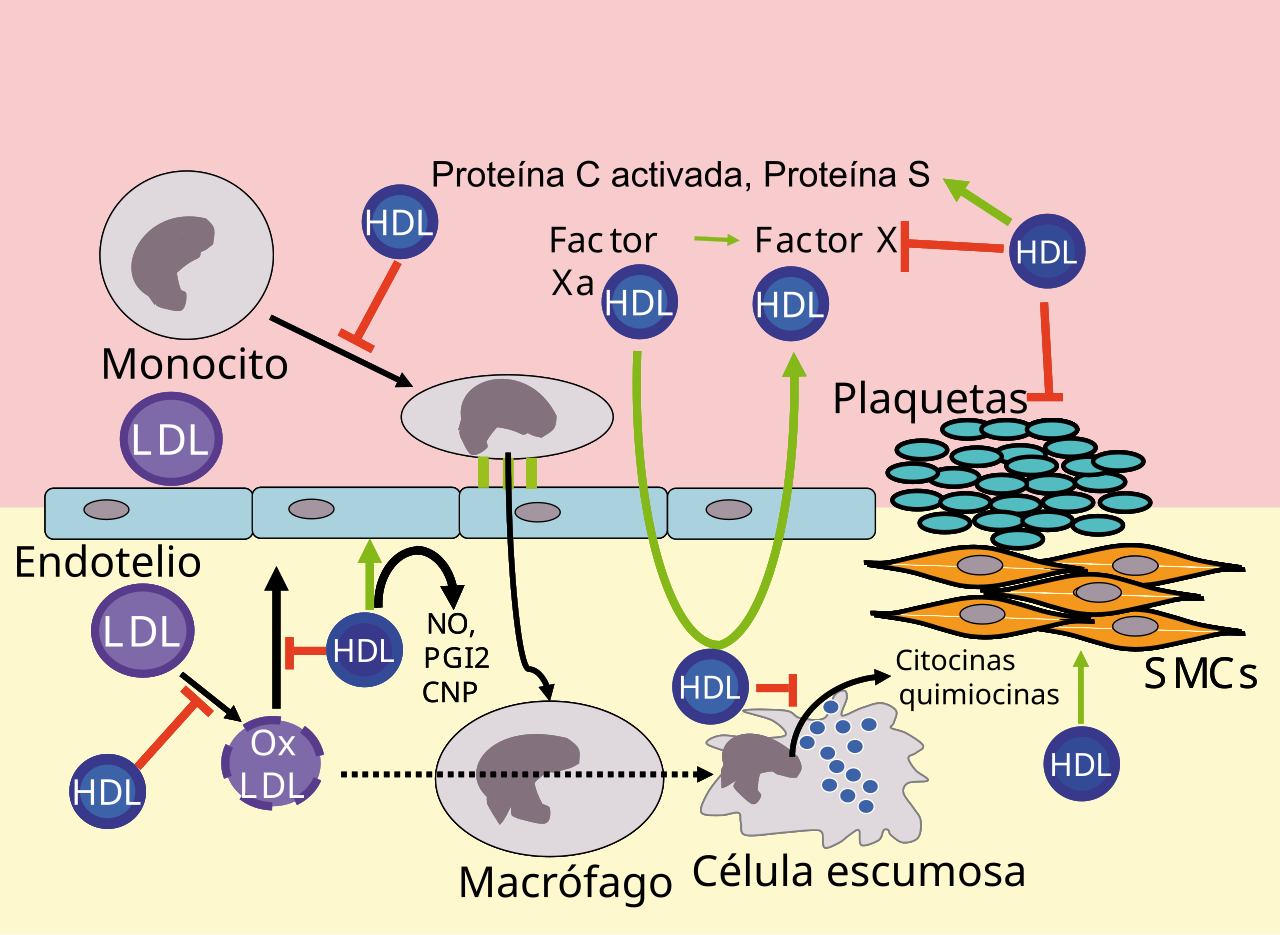
Lipoprotein is central to cardiovascular health because when LDL particles accumulate and oxidize in arterial walls, they drive the inflammatory cascade behind atherosclerosis. At the same time, HDL helps reverse that damage by ferrying excess cholesterol back to the liver, making the lipoprotein system a double-edged sword for the body.
More in Cell And Molecular Biology 1-24
Elsewhere in the Cell And Molecular Biology universe
Spotted an error? Know more?
This is a living reference — every entry is fact-audited, and reader corrections feed straight into our audit queue. Suggest an edit · See this site's audit record