Molecular biology
Study of molecular structures and processes in cells.
Molecular biology is a field of biology focused on understanding the molecular structures and chemical processes that form the basis of biological activity, both inside cells and between them. Its core concerns are nucleic acids—like DNA and RNA—and proteins, investigating how these large molecules are built, what they do, and how they interact to drive processes such as replication, transcription, translation, and protein synthesis. The discipline draws on multiple fields, including genetics, biochemistry, physics, mathematics, and, more recently, computer science through bioinformatics.
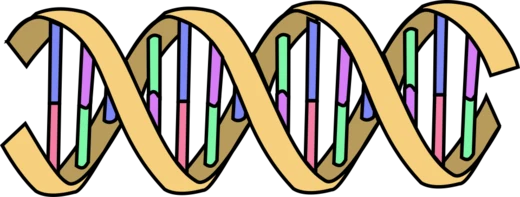
While cells and other microscopic structures had been observed in living things since the 1700s, a detailed grasp of the mechanisms behind their behavior only emerged in the 1900s, once technologies from physics and chemistry had advanced enough for biological use. The term "molecular biology" was first used in 1945 by English physicist William Astbury. He described it as an approach aimed at uncovering the physical and chemical structures and properties of biological molecules, their interactions with other molecules, and how these interactions explain the observations of classical biology, which studies biological processes at larger scales. In 1953, Francis Crick, James Watson, Rosalind Franklin, and their colleagues at the Medical Research Council Unit, Cavendish Laboratory, were the first to describe the double helix model for DNA’s chemical structure. This is often seen as a landmark event for the young field, as it provided a physical and chemical basis for understanding nucleic acids as the primary material of biological inheritance. They proposed this structure based on earlier work by Franklin, which was shared with them by Maurice Wilkins and Max Perutz. This discovery led to the identification of DNA in other microorganisms, plants, and animals.
The field includes techniques that allow scientists to study molecular processes. These methods are used to efficiently develop new drugs, diagnose diseases, and better understand cell physiology. Some clinical research and medical treatments arising from molecular biology fall under gene therapy, while the application of molecular biology or molecular cell biology in medicine is now called molecular medicine.
Molecular biology sits at the intersection of biochemistry and genetics. As these scientific disciplines emerged and evolved in the 20th century, it became clear that both aimed to determine the molecular mechanisms behind vital cellular functions. Advances in molecular biology have been closely tied to the development and refinement of new technologies.
The field of genetics arose from attempts to understand the rules of reproduction and heredity, and the nature of hypothetical units of heredity called genes. Gregor Mendel pioneered this work in 1866, when he first described the laws of inheritance he observed in his studies of pea plant crosses. One such law is the law of segregation, which states that diploid individuals with two alleles for a particular gene will pass one of these alleles to their offspring. Because of this critical work, the study of genetic inheritance is now called Mendelian genetics.
A major milestone in molecular biology was the discovery of DNA’s structure. This work began in 1869 with Friedrich Miescher, a Swiss biochemist who first proposed a structure called nuclein—now known as DNA. He discovered this substance by studying pus-filled bandages and noting the unique properties of phosphorus-containing substances. Another notable contributor was Phoebus Levene, who proposed the "polynucleotide model" of DNA in 1919 based on his biochemical experiments with yeast. In 1950, Erwin Chargaff expanded on Levene’s work and elucidated critical properties of nucleic acids: first, the sequence of nucleic acids varies across species; second, the total concentration of purines (adenine and guanine) is always equal to the total concentration of pyrimidines (cytosine and thymine). This is now known as Chargaff’s rule. In 1953, James Watson and Francis Crick published the double helical structure of DNA, based on X-ray crystallography work done by Rosalind Franklin, which was conveyed to them by Maurice Wilkins and Max Perutz. Watson and Crick described the structure and speculated about its implications for possible mechanisms of DNA replication. Watson, Crick, and Wilkins were awarded the Nobel Prize in Physiology or Medicine in 1962 for proposing a model of DNA’s structure. In 1961, it was demonstrated that when a gene encodes a protein, three sequential bases of a gene’s DNA specify each successive amino acid of the protein. Thus, the genetic code is a triplet code, where each triplet (called a codon) specifies a particular amino acid. It was also shown that codons do not overlap in the DNA sequence encoding a protein, and that each sequence is read from a fixed starting point. Between 1962 and 1964, using conditional lethal mutants of a bacterial virus, fundamental advances were made in understanding the functions and interactions of proteins involved in DNA replication, DNA repair, DNA recombination, and the assembly of molecular structures.
- field
- Molecular biology
- key_contributors
- Francis Crick, James Watson, Rosalind Franklin, Maurice Wilkins, Max Perutz
- related_disciplines
- Genetics, biochemistry, physics, mathematics, bioinformatics
Lore & Background
Though cells and other microscopic structures had been observed as early as the 18th century, a detailed understanding of cellular mechanisms did not emerge until the 20th century, when technologies from physics and chemistry advanced enough to be applied in biology. This landmark event provided a physico-chemical basis for understanding nucleic acids as the primary substance of biological inheritance.
Reader's Guide
Molecular biology sits at the intersection of biochemistry and genetics, emerging as these disciplines evolved in the 20th century to determine the molecular mechanisms underlying vital cellular functions. Advances have been closely related to the development of new technologies and their optimization. The field includes techniques that enable scientists to learn about molecular processes, used to efficiently target new drugs, diagnose disease, and better understand cell physiology. Some clinical research and medical therapies arising from molecular biology are covered under gene therapy, while its use in medicine is now referred to as molecular medicine.
Did You Know?
- Erwin Chargaff's rule states that the total concentration of purines equals the total concentration of pyrimidines in nucleic acids.
Frequently Asked Questions
What are Molecular biology's powers/role?
Its central mission is to examine nucleic acids such as DNA and RNA, along with proteins, and to explain how their structures, functions, and interactions power processes like replication, transcription, translation, and protein synthesis.
Why is Molecular biology important?
It weaves together genetics, biochemistry, physics, mathematics, and bioinformatics into a single framework for decoding how living systems work at the smallest scale. That integrative reach has made it a cornerstone of modern biomedical research and technology.
Who are Molecular biology's key allies?
Its most celebrated contributors include Francis Crick, James Watson, Rosalind Franklin, Maurice Wilkins, and Max Perutz, whose combined work shaped our understanding of DNA architecture and protein function.
More in Cell And Molecular Biology 1-24
Elsewhere in the Cell And Molecular Biology universe
Spotted an error? Know more?
This is a living reference — every entry is fact-audited, and reader corrections feed straight into our audit queue. Suggest an edit · See this site's audit record